
Uncategorized
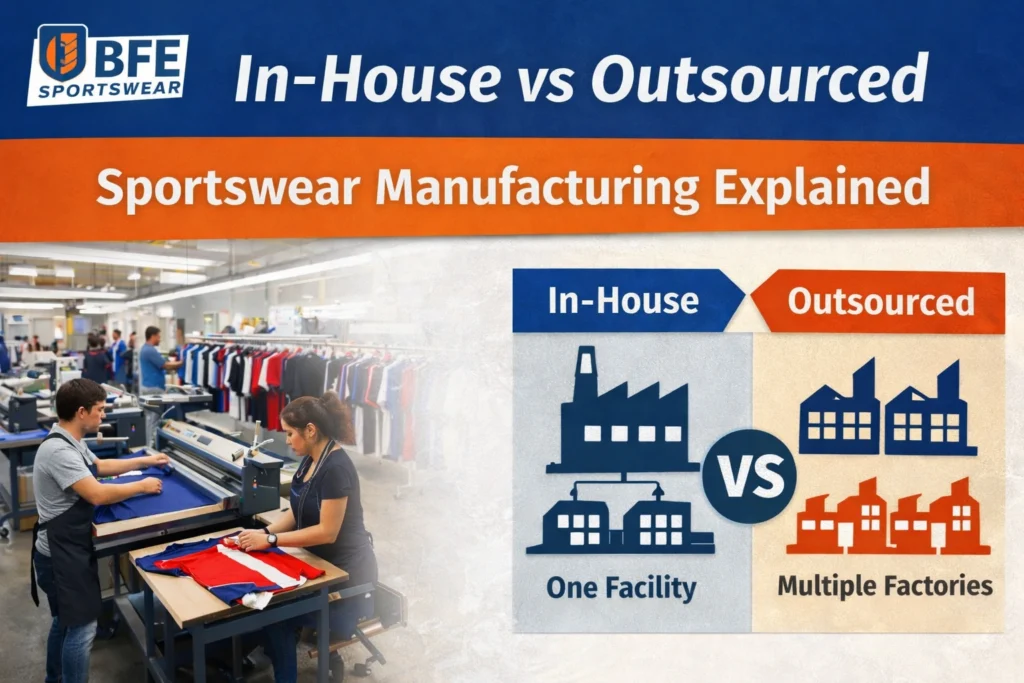
In-House vs Outsourced Sportswear Manufacturing Explained
Jan
Choosing the right sportswear manufacturing model is one of the most important decisions for teams, clubs, leagues, and wholesale buyers. The quality of uniforms, delivery timelines, customization accuracy, and even future reorders depend heavily on how those uniforms are produced. Two common production models dominate the industry today: in-house sportswear manufacturing and outsourced sportswear manufacturing.
This guide by BFE Sportswear explains both approaches in detail, compares their advantages and limitations, and helps you decide which option is better for your specific needs. Whether you’re ordering uniforms for a school team, a professional club, or bulk wholesale distribution, understanding these manufacturing models can save time, money, and frustration.
What Is In-House Sportswear Manufacturing?
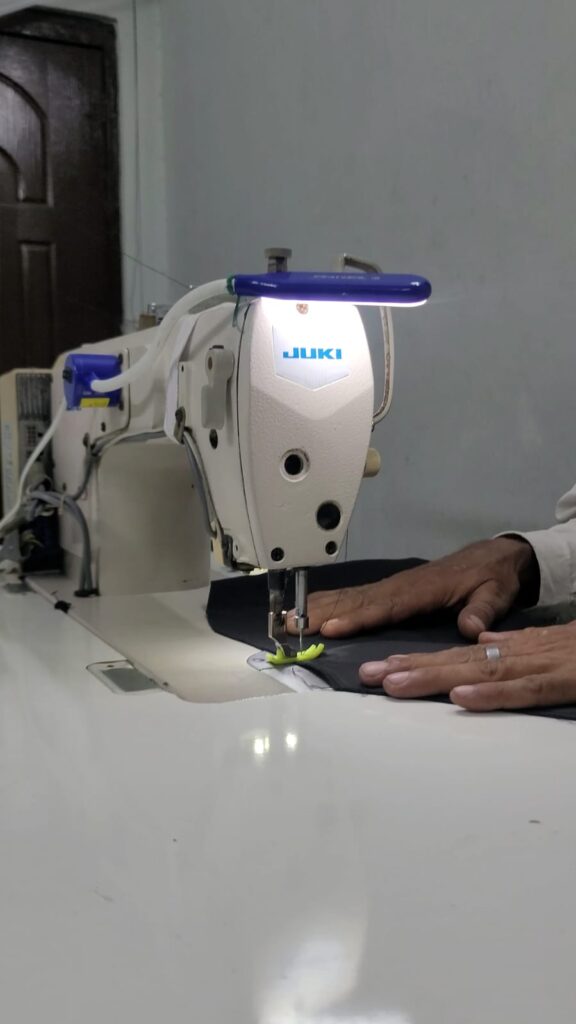
In-house sportswear manufacturing means that all major production processes are handled within a single manufacturing facility. This typically includes fabric cutting, printing, stitching, finishing, and quality inspection under one operational system.
Manufacturers using this model maintain direct control over each stage of production. Companies often outsource to cut costs and scale production quickly, managing different parts of the manufacturing process at specialized locations. Communication is more direct, and production workflows tend to be more structured and predictable.
In-house manufacturing is commonly preferred by:
- Professional sports teams
- Schools and colleges
- Clubs with strict quality requirements
- Buyers planning long-term or repeat orders
This model focuses on consistency, reliability, and detailed customization, making it ideal for teams that value precision and long-term uniform consistency.
Pros and Cons of In-House Sportswear Manufacturing
Pros of In-House Manufacturing
- Stronger Quality Control
Every step is monitored internally, reducing the chances of stitching errors, printing issues, or fabric inconsistencies. - Customization Accuracy
Logos, player names, numbers, and color schemes are handled carefully, ensuring designs match approved samples. - Faster Communication
Buyers communicate directly with the production team, reducing misunderstandings and delays. - Reliable Reorders
Since designs and patterns are stored in-house, repeat orders remain consistent in look and sizing.
Cons of In-House Manufacturing
- Higher Initial Cost
In-house facilities may cost more upfront compared to outsourced options. - Capacity Limitations
Some manufacturers may have production limits during peak seasons.
What Is Outsourced Sportswear Manufacturing?
Outsourced sportswear manufacturing involves contracting one or more third-party factories to handle production. In this model, a brand or supplier coordinates with external manufacturers for printing, stitching, or assembly.
Companies often outsource to reduce costs or scale production quickly. They handle different parts of the manufacturing process at different locations, depending on specialization and availability.
This approach is commonly chosen by:
- New or startup brands
- Budget-focused buyers
- Short-term or promotional orders
- Businesses testing new markets
Outsourced manufacturing can offer flexibility but often comes with trade-offs related to control and consistency.
Pros and Cons of Outsourced Sportswear Manufacturing
Pros of Outsourced Manufacturing
- Lower Production Costs
Outsourcing often reduces labor and operational expenses. - Flexible Volume Options
Suitable for both small and very large orders depending on supplier capacity. - Faster for Basic Designs
Simple, standard designs can sometimes be produced quickly.
Cons of Outsourced Manufacturing
- Limited Quality Control
Quality depends on third-party standards, which may vary. - Communication Delays
Messages pass through multiple layers, increasing the risk of errors. - Inconsistent Reorders
Fabric, sizing, or print quality may differ in future orders.
In-House vs Outsourced Sportswear Manufacturing (Comparison Table)
| Factor | In-House Manufacturing | Outsourced Manufacturing |
|---|---|---|
| Quality Control | High, internally monitored | Varies by third-party |
| Customization Accuracy | Very precise | May vary |
| Communication | Direct and fast | Slower, multi-step |
| Production Time | Predictable timelines | Can vary |
| Cost Structure | Higher upfront | Lower initial cost |
| Reorder Consistency | Strong and reliable | Often inconsistent |
| Risk Level | Low | Medium to high |
| Best For | Teams, clubs, wholesale buyers | Budget or short-term orders |
Which Option Is Better for Teams
The better manufacturing option depends on your specific goals, budget, and future plans.
- School and College Teams
In-house manufacturing is ideal due to consistent sizing, durability, and repeat orders year after year. - Professional Clubs
In-house production ensures premium quality, accurate branding, and long-term uniform identity. - League Teams
In-house manufacturing offers consistency across multiple teams and seasons. - Wholesale Buyers and Resellers
In-house manufacturing supports bulk orders, OEM branding, and reliable long-term supply. - Short-Term Events or Promotions
Outsourced manufacturing may be acceptable for simple, one-time use uniforms.
Common Mistakes Buyers Make
Many buyers face issues not because of the manufacturer, but due to lack of understanding of the production model. Common mistakes include:
- Choosing the lowest price without checking manufacturing control
- Not asking where production actually happens
- Ignoring sample approval stages
- Overlooking future reorder needs
- Assuming all manufacturers operate the same way
Avoiding these mistakes leads to smoother production and better results.
Questions Buyers Should Ask Before Choosing a Manufacturer
Before placing an order, consider asking:
- Do you handle production in-house or outsource it?
- How do you check quality during the manufacturing process?
- Can you reproduce the same design consistently for reorders?
- What fabrics and printing methods are available?
- What are the production and shipping timelines?
These questions help clarify expectations and reduce risk.
Final Conclusion
Both in-house and outsourced sportswear manufacturing have their place in the industry. Outsourcing can work for basic or short-term needs, while in-house manufacturing offers better quality control, customization accuracy, and long-term reliability. For teams, clubs, and wholesale buyers who value consistency and professional results, understanding these differences is essential before placing an order.
Making an informed choice ensures your sportswear investment delivers performance, durability, and visual impact season after season.
Partner with BFE Sportswear for reliable in-house sportswear manufacturing built for teams and bulk orders.
